








Meta description: Control access to your void property with managed key-safe codes, an audit trail and layered alarm protection from Wall2Wall Security.
Sources:
- Loxal Face Fix Pro key safe: https://www.wall2wallsecurity.co.uk/loxal/ and https://loxalsecurity.com/face-fix-key-safe/
- ONS Crime in England and Wales, year ending March 2026: https://www.ons.gov.uk/peoplepopulationandcommunity/crimeandjustice/bulletins/crimeinenglandandwales/yearendingmarch2026
Sources
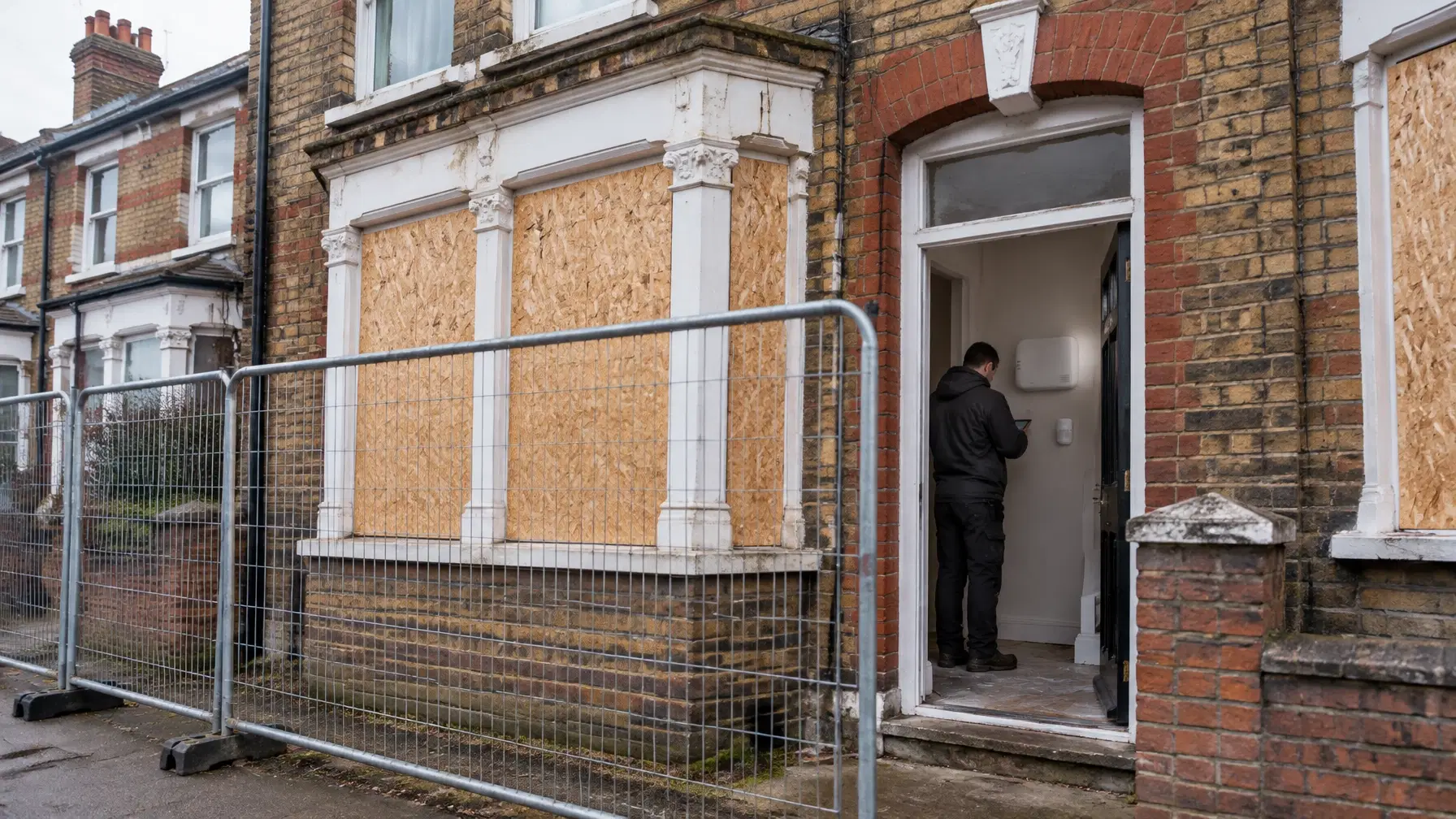
It’s 7:15 on a wet Monday morning. A contractor is at a vacant property, waiting to get inside. The agent has the key. The alarm code is in an old email. And nobody is quite sure who else has a copy.
That is not a rare security failure. It is what happens when access is treated as an admin detail rather than part of the protection plan.
The key is the first security decision on a void property.
Take control of who can get through the door
Void properties rarely stay untouched. Agents, maintenance teams, surveyors, insurers and emergency contractors may all need access. People change. Work gets rescheduled. Keys move between hands.
A key can be copied. A fixed code can be observed, shared or kept long after a job ends. Once that happens, the question is simple: who still has a key?
You need more than a safe place to store one. You need a way to manage access, change permissions and see what happened.
The Loxal Face Fix Pro is a digital key safe with a Sold Secure Gold rating. Through the IDACS cloud platform, you can issue 7-digit permanent codes or self-expiring temporary codes to approved users by SMS or email. When a contractor’s visit ends, their temporary code expires. No chasing keys. No changing one shared code for everyone.
Every access event is recorded in a full audit trail and synchronised through the Loxal Audit App. That gives you a clearer answer to who accessed the safe and when.

Give access to the alarm, not the alarm code
A keyholder may need to enter and disarm the alarm. That does not mean they need your client’s alarm code.
The Face Fix Pro integrates with the VESTA alarm. An authorised code holder can use the key-safe access process to arm, disarm and control the alarm without being given the alarm code itself. It keeps a sensitive credential with the people who need to manage the system, rather than circulating it among every contractor.
That is a practical improvement for your client and a cleaner handover for your team. Explore the Loxal key safe range and confirm the access workflow suits the site and its users.
Build layers around the entrance
A managed key safe addresses access. It does not replace perimeter or internal detection.
A better design puts access control inside a multi-layered security plan:
- Outer layer: Optex wireless perimeter detection can alert you to activity around vulnerable approaches before someone reaches the building.
- Inner layer: VESTA battery powered alarm systems protect the property itself, with wireless devices suited to void sites where fixed wiring or mains power may not be practical.
- Visual verification: The VESTA 460 outdoor PIRCAM can send images to the ARC to help support the agreed response.
- Access layer: The Loxal key safe gives authorised people controlled entry, while the alarm integration lets them manage the system without receiving its alarm code.
The VESTA 068 hub supports 4G communication and up to 50 wireless devices. That gives installers room to build a site-specific system and adapt it as the property or risk changes. Authorised users can also use the SmartHomeSec app to manage system access and status.

The ARC response needs just as much thought as the hardware. Agree what happens when an alarm activates, who is contacted and how an authorised responder gets access. A code and a key are only useful if the response process is clear.
This is rapid deployment security in practice: wireless protection that can be installed and adjusted without turning a temporary property into a major wiring project.
Make every visit easier to account for
Good access management should make the next visit straightforward, not create another admin headache. Set the process up before the first contractor arrives:
- Name the people who need access and what they need to do.
- Issue temporary codes for planned visits; keep permanent codes for users who genuinely require ongoing access.
- Check that the key safe and alarm integration work as intended during commissioning.
- Show the property manager how to issue, review and remove access.
- Agree how the ARC receives site details and follows the response plan.
There is a wider risk behind these practical steps. The Office for National Statistics recorded 223,456 burglary offences in England and Wales in the year ending March 2026, down 9% on the previous year. That figure covers residential and non-residential burglary; it is not a measure of void-property crime specifically. But it is a useful reminder that an empty building still needs a properly considered security plan. See the ONS crime statistics.
Check the client’s policy conditions too. Insurer requirements vary, so confirm what applies to the property, access arrangements and inspection schedule. Our void property insurance guide is a useful starting point.

Start with the key, then specify the system
The key safe is not an afterthought. It is where real-world access to an empty property begins. If you cannot say who can enter, when they can enter and how that access is managed, the rest of the security plan has a gap.
Wall2Wall Security brings more than 30 years of industry experience to rapid deployment solutions for installers and integrators. We know that void sites change. The security and access plan needs to keep up.
For your next project, start with the key. Then build out the perimeter detection, VESTA alarm and ARC response around the way the property will actually be used. If your site also involves scaffold access, see our scaffolding security guide.
Have a void property where you’re not sure who still has access? Contact Wall2Wall Security and tell us what the site needs.